
Views: 0 Author: Site Editor Publish Time: 2026-05-19 Origin: Site

You probably know standard vinyl flooring well. Now, you must navigate the complex, often hyped market of Stone Plastic Composite (SPC). It promises incredible durability, but cutting through the marketing noise takes significant effort. Balancing aesthetic demands, heavy foot traffic, and strict budgets feels overwhelming for many buyers. You want long-lasting floors without falling for exaggerated "indestructible" marketing claims that fail in the real world.
This guide delivers a transparent, spec-driven evaluation framework to help you decide. We will explore exact thickness requirements and expose common low-quality traps hidden in product datasheets. You will discover practical installation realities that dictate whether your floor survives everyday life. We also uncover the warranty fine print you must read before buying. By the end, you will know exactly how to evaluate your options and choose the right materials confidently.
SPC provides unmatched dimensional stability but requires proper underlayment to mitigate a rigid footfeel and hollow acoustics.
Total thickness matters less than the ratio of the core to the wear layer; a 6.0mm board with a 27mil wear layer outperforms thicker boards with inferior protective layers.
Acclimatization and subfloor preparation remain critical—SPC is 100% waterproof, but your subfloor is not.
Always scrutinize the fine print from your SPC Flooring manufacturer; fading from direct sunlight and extreme temperature shifts often void standard warranties.
Industry experts often refer to SPC as "LVT 2.0." It represents a massive structural upgrade over traditional luxury vinyl tiles. A standard board features a highly engineered 5-layer composition. Understanding these layers helps you evaluate quality.
UV Coating: This micro-layer sits on top. It prevents fading from sunlight and stops stubborn stains from penetrating the surface.
Wear Layer: This clear polyurethane layer dictates scratch resistance. It acts as the primary shield against foot traffic and pet claws.
Design/Print Layer: This thin film holds the high-definition photographic image. It gives the board its realistic wood or stone aesthetic.
Limestone-PVC Core: The heavy-duty backbone. It mixes limestone powder with PVC stabilizers to create an ultra-dense, rigid board.
Pre-attached Underlayment: High-quality planks include an EVA or IXPE foam backing. It adds acoustic absorption and improves footfeel.
The high-density limestone core delivers dimensional stability in action. It resists expansion and contraction far better than standard WPC (Wood Plastic Composite) or laminate planks. Because the core barely moves during temperature shifts, installers can lay up to 400 square meters seamlessly. You do not need unsightly expansion joints every few meters in climate-controlled environments. This makes it ideal for large open-concept homes or sprawling commercial lobbies.
Aesthetics matter daily. We highly recommend choosing matte finishes over high-gloss options. A high-gloss floor reflects light sharply, highlighting every speck of dirt and micro-scratch. Matte surfaces camouflage daily dust effortlessly. They also improve slip resistance, keeping spaces safer for children and elderly residents. When you select premium SPC Flooring, prioritize realistic matte textures for practical, long-term elegance.
Inspect the edge of the plank. You should clearly see the thick, dense core making up the vast majority of the profile.
Check if the underlayment feels firm. Overly squishy foam compresses too easily and stresses the locking joints over time.
Ask for exact specifications on the UV layer. Dual-cured UV coatings offer significantly better stain defense.
Marketing brochures often highlight overall thickness. Total thickness typically ranges from 3.2mm to 7mm. However, we must debunk the thickness myth. A thicker board dictates subfloor forgiveness, not scratch resistance. A 7mm board will bridge a slightly uneven concrete floor better than a 4mm board. Yet, if that 7mm board has a thin top layer, it will scratch just as quickly as the thinnest plank on the market.
You must understand the baseline for durability to avoid the "cheap SPC" trap. Entry-level specs often feature a 5.0mm total thickness paired with a 12mil (0.3mm) wear layer. Retailers push these heavily for active spaces. We warn against using them anywhere outside of low-traffic guest bedrooms. In a busy kitchen or hallway, a 12mil layer wears down prematurely. You will see dull wear paths form within a few short years.
We establish a strict expert standard for high-traffic or commercial viability. You should target a 6.0mm to 6.5mm overall thickness. Crucially, you must pair this core with a minimum 27mil (approx. 0.7mm) wear layer. This specific ratio ensures genuine longevity against heavy rolling loads, office chairs, and active pets.
Below is a quick reference table to help you decode the specs while shopping:
Total Thickness | Wear Layer (Mil / mm) | Recommended Application | Durability Level |
|---|---|---|---|
3.5mm - 4.5mm | 6mil - 12mil (0.15 - 0.3mm) | Light residential, closets, guest rooms | Entry |
5.0mm - 5.5mm | 20mil (0.5mm) | Active homes, living rooms, kitchens | Standard |
6.0mm - 7.0mm | 27mil - 30mil+ (0.7mm+) | Commercial spaces, retail, heavy traffic | Expert |
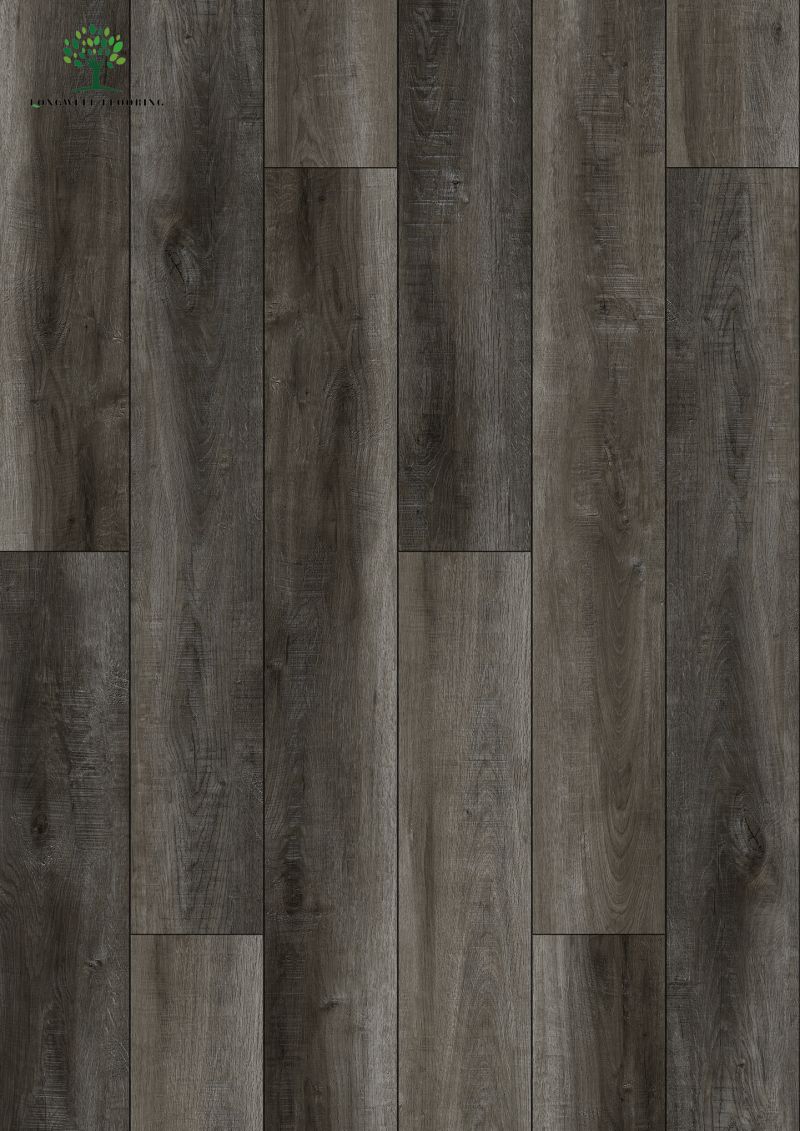
You must weigh advantages against physical trade-offs. The benefits extend far beyond basic waterproofing. It boasts excellent hypoallergenic properties. Because the surface is incredibly dense and non-porous, it does not harbor dust mites, pet dander, or pollen. It also offers extreme dent resistance under static weight. You can place heavy bookcases or dining tables on it without worrying about permanent indentations. Installers love the ease of click-lock deployment. You can float these planks directly over existing hard surfaces like plywood or old vinyl.
However, we must acknowledge the trade-offs. The rigid limestone core creates a colder footfeel compared to softer WPC materials. You might also notice a "hollow sound" or a distinct clicking noise when walking in hard-soled shoes. You can mitigate this acoustic issue by pairing the planks with high-quality IXPE or EVA acoustic padding. Never install rigid planks without a premium underlayment.
Impact vulnerability remains another reality. The wear layer resists scratches brilliantly. Still, heavy, sharp dropped objects can chip the rigid top surface. A cast-iron skillet dropped from counter height will likely cause a visible dent or crack. Furthermore, printed design films lack the infinite uniqueness of natural hardwood. Expect some pattern repetition across a large room. Skilled installers shuffle planks from different boxes to disguise this repetition.
Let us compare SPC Flooring against popular alternatives directly to clarify your options:
Versus WPC (Wood Plastic Composite): SPC feels significantly denser and resists heavy dents better. WPC incorporates foaming agents in its core. This makes WPC softer, warmer, and quieter underfoot, but more susceptible to gouges from heavy furniture.
Versus Ceramic Tile: Rigid vinyl delivers faster, grout-free installation. You save thousands on labor costs compared to traditional tile work. Tile feels much colder and shatters glass items instantly upon impact, whereas vinyl offers a slight cushion.
Versus Laminate: Laminate uses a fiberboard core that swells and ruins when exposed to standing water. Stone composite cores are 100% waterproof and will not swell, making them vastly superior for bathrooms, kitchens, and basements.
Marketing videos often hype immediate, weekend-warrior installation. Do not fall for it. Acclimatization mandates remain critical. You must let boards lie flat in a climate-controlled room for 24 to 48 hours prior to locking them together. Cross-stack the unopened boxes in the center of the room. This step allows the core temperature of the planks to stabilize and match the room's ambient climate.
Radiant heating protocols require strict attention. The dense stone core pairs exceptionally well with underfloor heating systems because it transfers heat efficiently. However, you must follow the mandatory "slow warming" rule. When turning on the heat for the first time, ramp up temperatures by no more than 5°C (approx. 9°F) per day. Sudden heat spikes cause structural shock. Rapid expansion can buckle the floor or snap the click-lock joints.
Subfloor tolerance demands precision. High-density planks require a highly leveled subfloor. The industry standard requires the subfloor to be flat to within 3/16 of an inch over a 10-foot radius. The rigidity of the planks means they bridge minor gaps easily. Yet, boards will bend and eventually crack under foot traffic if placed over deep divots. Invest time and money in a high-quality self-leveling compound before laying a single plank.
Skipping the moisture barrier. The planks are waterproof, but concrete subfloors emit water vapor. Trapped moisture causes mold growth under the floor.
Forcing the locking mechanism. If a plank does not click easily, do not smash it with a hammer. Clear the groove of debris and try again.
Leaving insufficient expansion gaps. Always leave a 1/4-inch gap around the perimeter of the room to accommodate seasonal house shifting.
Following strict SPC Flooring preparation guidelines guarantees a floor that lasts decades without buckling or separating.
Warranties often hide crucial details in the fine print. You will see drastic differences in coverage lifespans based on application. Residential warranties often promise 25 years or even lifetime coverage. Commercial warranties usually cap at 5 to 10 years due to the heavy abuse of retail traffic. Do not assume a lifetime residential warranty means the product is indestructible.
Watch out for clauses that void your warranty instantly. Manufacturers protect themselves with strict installation guidelines. Common denial triggers include:
Outdoor installation: Installing boards outdoors or in non-climate-controlled environments like unheated sunrooms immediately voids coverage. The material cannot handle extreme freeze-thaw cycles.
Bottom-up moisture: Ignoring moisture damage originating from below destroys warranties. Subfloor hydrostatic pressure can push alkaline moisture upward, breaking down the underlayment glue.
UV exposure: Allowing discoloration or fading due to prolonged, unfiltered sunlight exposure is rarely covered. You must use blinds or UV-filtering window films in sun-drenched rooms.
Vetting your supplier protects your investment. You need a reputable SPC Flooring manufacturer that provides transparent documentation. Demand strict compliance documents before placing bulk orders. They should explicitly state the use of phthalate-free, organic plasticizers to ensure indoor air safety. Always ask for verifiable IIC (Impact Insulation Class) and STC (Sound Transmission Class) acoustic testing scores. Independent testing data proves the floor actually absorbs noise rather than just claiming to be "quiet."
Stone Plastic Composite flooring acts as a highly engineered, cost-effective solution when specified correctly. It solves the moisture problems of laminate and the denting issues of traditional vinyl. By understanding the core anatomy, you can confidently navigate past cheap, thin materials that fail prematurely.
We advise you to prioritize the wear layer thickness over total board thickness. Invest in planks with built-in premium acoustic underlays to drastically improve footfeel and reduce hollow echoes. Most importantly, rigorously prepare and level your subfloors to protect the click-lock mechanisms from stress fractures.
Take action today by requesting physical samples. Test the matte finishes and inspect the core density yourself. Check the technical data sheets for 27mil wear layers and phthalate-free certifications. Finally, schedule a precise site measurement and moisture test for your subfloor to ensure a flawless installation.
A: Yes. You can float the planks directly over existing ceramic or porcelain tiles. However, ensure the grout lines are not excessively wide or deep. If grout lines exceed 1/4 inch in width, you must apply a leveling compound first. This prevents the rigid core from slowly sinking into the gaps and breaking under foot traffic.
A: High-quality, certified planks use phthalate-free stabilization and emit ultra-low to zero VOCs. You must verify these claims by checking for independent, third-party certifications like FloorScore or Greenguard. These certifications ensure the indoor air quality remains completely safe for your family and pets over the floor's lifetime.
A: No. Despite being completely waterproof, the material cannot withstand extreme temperature fluctuations. Drastic heat from direct summer sun or freezing winter cold causes the rigid core to expand and contract rapidly. This movement will buckle the floor and snap the locking mechanisms. Keep it in climate-controlled indoor environments only.


