
Views: 0 Author: Site Editor Publish Time: 2026-03-18 Origin: Site

Have you ever wondered how Oak Flooring can transform your home? It influences style, durability, and daily maintenance. In this guide, you’ll discover how to select the right oak type, species, and finish, ensuring your floors match your space, lifestyle, and long-term design goals.
Solid oak planks are milled from a single piece of wood, offering authentic texture and the ability to refinish the surface multiple times over decades. Engineered oak is composed of a thin hardwood layer bonded to plywood or HDF, offering greater dimensional stability in moisture-prone areas. Solid oak is best suited for above-grade rooms with stable humidity, while engineered oak excels in basements, kitchens, and spaces with seasonal temperature variations. Both provide natural oak beauty, but the choice depends on environmental conditions, maintenance expectations, and long-term performance.
Feature | Solid Oak | Engineered Oak | Notes |
Construction | Single-piece hardwood | Layered hardwood + plywood/HDF | Stability vs. authenticity |
Moisture Resistance | Moderate | High | Engineered resists expansion |
Refinishing Potential | 4–6 cycles | 1–2 cycles | Depends on veneer thickness |
Ideal Rooms | Living, bedrooms | All levels including basements | Environment-specific |
Red oak offers warm, reddish tones with pronounced grain, making it ideal for traditional or rustic interiors. White oak has a more neutral, golden-brown tone with straighter, tighter grain, providing better moisture resistance and durability for high-traffic areas. While both are strong, white oak is slightly harder, making it a better option for kitchens, entryways, or commercial spaces. Selecting between them involves balancing style preference, traffic, and moisture exposure.
Prefinished Oak Flooring comes pre-stained and sealed from the factory, allowing immediate installation and minimal disruption. On-site finishing allows full customization of color and finish but requires sanding, staining, and curing, adding labor and project time. Prefinished floors suit large-scale or fast installations, while on-site finishing is ideal for custom stains or matching existing woodwork.
Red and white oak are the most widely used domestic hardwoods. Red oak is warm, budget-friendly, and versatile for staining, while white oak provides enhanced hardness, moisture resistance, and neutral tones for modern interiors. Both species are available in solid and engineered formats, giving flexibility across budgets and design goals.
Other species like maple, hickory, walnut, and cherry provide unique colors, grains, and hardness levels. Maple is ideal for light, contemporary designs; hickory offers dramatic grain and rustic appeal; walnut delivers deep, elegant tones; cherry provides warm reddish hues. These alternatives can be preferred in spaces with specific aesthetic requirements or where extreme durability is needed.
Oak planks can be plainsawn, quartersawn, or riftsawn. Plainsawn provides varied, pronounced grain; quartersawn produces linear, uniform patterns; riftsawn yields subtle, refined textures. Consider cut type relative to room size, lighting, and furniture placement to achieve cohesive aesthetics while maintaining functional durability.
Species | Grain Pattern | Color Palette | Best Use |
Red Oak | Pronounced, varied | Warm reddish | Traditional/rustic rooms |
White Oak | Straight, subtle | Golden brown | Modern/contemporary areas |
Maple | Tight, fine | Light cream | Minimalist interiors |
Hickory | Bold, dramatic | Varied brown | High-traffic rustic spaces |
Oak hardness is measured on the Janka scale, with red oak at 1260 and white oak at 1360. Harder wood resists dents and scratches, critical for homes with children, pets, or heavy foot traffic. Combining hardwood selection with durable finishes such as aluminum oxide extends floor life and preserves aesthetics for decades.
Regular sweeping or vacuuming removes grit that can scratch surfaces. Use manufacturer-approved cleaning products and promptly clean spills to prevent staining or warping. Maintain indoor humidity between 35–55% to prevent cupping, particularly for solid oak. Engineered oak tolerates minor fluctuations better but still benefits from climate control.
Solid oak can be refinished four to six times, restoring appearance over decades. Engineered oak generally allows one to two refinishing cycles, depending on veneer thickness. Choosing the right construction type directly impacts long-term maintenance, durability, and return on investment.
Feature | Solid Oak | Engineered Oak |
Lifespan | 50+ years | 25–40 years |
Refinishing Cycles | 4–6 | 1–2 |
Moisture Resistance | Moderate | High |
Best For | Above-grade rooms | Basements, kitchens, variable humidity |
Nail-down installation is ideal for solid oak over wooden subfloors, offering excellent long-term stability and a classic, secure feel underfoot. Glue-down installation works best for engineered oak on concrete or other stable surfaces, providing strong adhesion and minimizing movement. Floating floors are versatile and DIY-friendly, allowing planks to lock together over a variety of subfloors without permanent attachment. Each method affects labor requirements, cost, and overall performance, so choosing the right installation approach is crucial for maximizing the lifespan and visual appeal of your Oak Flooring.
Solid oak performs optimally on wooden subfloors with stable humidity and temperature, as it is more prone to expansion and contraction. Engineered oak, however, is designed to handle moisture variations and can be installed over concrete, radiant heating systems, and in basements without compromising stability. Proper subfloor preparation—including leveling, moisture barriers, and cleaning—is essential to prevent warping, gaps, or surface imperfections, ensuring that the floor remains durable and maintains its finish quality over time.
DIY installation is achievable for floating engineered oak floors, particularly in small or straightforward spaces, but it requires precision, careful measurement, and attention to detail to avoid uneven seams or misalignment. Professional installers bring experience, specialized tools, and knowledge of acclimation processes, ensuring solid adhesion, accurate nailing, and flawless results. For larger rooms, multi-level projects, or high-end finishes, professional installation is recommended to protect your investment and guarantee the longevity and aesthetic integrity of your Oak Flooring.
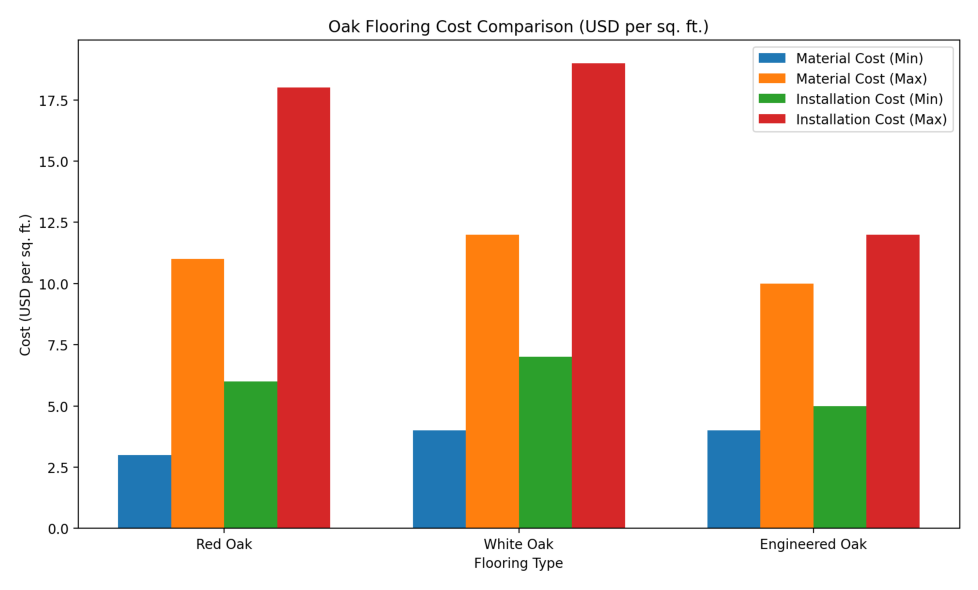
Red oak typically costs $3–$11 per sq.ft., white oak $4–$12. Engineered options can be less expensive upfront, especially for high-grade or wider planks. Material choice should balance aesthetics, durability, and budget.
Labor costs vary by installation method. Nail-down and on-site finishing are more expensive; floating or prefinished installations reduce labor time. Include underlayment, subfloor prep, and approximately 10% allowance for waste when budgeting.
Solid oak offers excellent durability and multiple refinishing cycles. White oak provides higher moisture resistance for longer-lasting performance. Considering both initial and long-term value ensures informed investment decisions.
Cost Factor | Red Oak | White Oak | Engineered Oak |
Material Cost | $3–$11 | $4–$12 | $4–$10 |
Installation Cost | $6–$18 | $7–$19 | $5–$12 |
Longevity | High | Very High | Moderate-High |
Red oak complements warm, traditional, and rustic interiors; white oak suits modern, minimalist, or Scandinavian designs. Coordinating flooring with furniture, cabinetry, and wall finishes ensures cohesive spaces. Oak’s versatility allows seamless integration across multiple design themes.
Narrow planks elongate space and add formality, medium planks suit most rooms, and wide planks create an open, airy feel. Layout options include straight, herringbone, or chevron patterns, adding sophistication and visual interest.
Light stains brighten rooms, medium tones offer versatility, and dark stains add depth and elegance. Matte finishes reduce glare, gloss enhances sheen, and hand-scraped textures add rustic charm. Finish selection also affects maintenance, durability, and scratch visibility.
Plank Feature | Options | Best Use |
Width | Narrow, Medium, Wide | Room size, aesthetic preference |
Finish | Matte, Gloss, Hand-scraped | Light reflection, style, durability |
Stain | Light, Medium, Dark | Interior color coordination |
When selecting Oak Flooring, choosing FSC-certified or responsibly sourced local oak ensures eco-friendly and sustainable flooring options. These certifications guarantee that the wood comes from well-managed forests, promoting long-term environmental stewardship. Sustainable choices not only benefit the planet but also appeal to environmentally conscious homeowners, businesses, and investors seeking flooring solutions that align with green building standards. Additionally, selecting durable, responsibly harvested oak reduces the need for frequent replacement, further minimizing environmental impact.
Low-VOC finishes and sealants enhance indoor air quality by reducing chemical emissions, creating a healthier living or working environment. Oak’s natural properties help limit allergens such as dust and pollen, making it a practical choice for households with allergy sufferers or for commercial spaces where air quality is critical. Combined with proper ventilation and regular maintenance, oak flooring can contribute to a cleaner, safer indoor environment while retaining its durability and visual appeal over time.
Choosing the right Oak Flooring involves considering species, style, and durability. Red oak adds warmth, while white oak provides modern appeal and moisture resistance. Solid oak allows multiple refinishing cycles, and engineered oak offers stability in moist areas. LongWell Home Materials Co., Ltd. delivers high-quality oak flooring with durable construction and versatile designs, helping homeowners achieve long-lasting beauty and performance.
A: Oak Flooring is hardwood made from red or white oak, offering durability and natural beauty for homes and commercial spaces.
A: Consider species, solid or engineered construction, plank width, finish, and room moisture when selecting Oak Flooring.
A: Engineered Oak Flooring provides better stability in moisture-prone areas like kitchens and basements.
A: Red oak typically costs $3–$11 per sq.ft., white oak $4–$12, and engineered options may be slightly lower.
A: Yes, solid oak can be refinished 4–6 times, while engineered oak allows 1–2 refinishing cycles depending on veneer thickness.
A: Sweep regularly, clean spills promptly, and maintain humidity between 35–55% to protect Oak Flooring.


